Rosa Vogel · 25 October 2026
Silvora Moss Research Drives Coordinated Dialect Documentation and Festival Planning Efforts
Researchers in the Silvora valley have documented several bryophyte species whose distribution patterns align closely with shifting dialect boundaries, and this alignment has prompted archivists along with festival organizers to launch joint mapping projects that track both ecological and linguistic changes over time. Data from recent surveys shows moss colonies expanding into zones previously noted for distinct phonetic variations, while festival records indicate that traditional event sites have followed similar ecological shifts since the early 2000s.
Teams from regional universities began cross-referencing bryophyte location data with audio archives of local speech patterns in 2024, and the combined datasets revealed correlations that neither group had anticipated on their own. Observers note that certain moss varieties thrive in areas where older dialect forms persist, whereas newer linguistic influences appear more common in zones with reduced moss coverage due to soil alterations.
Field Studies Reveal Overlapping Patterns
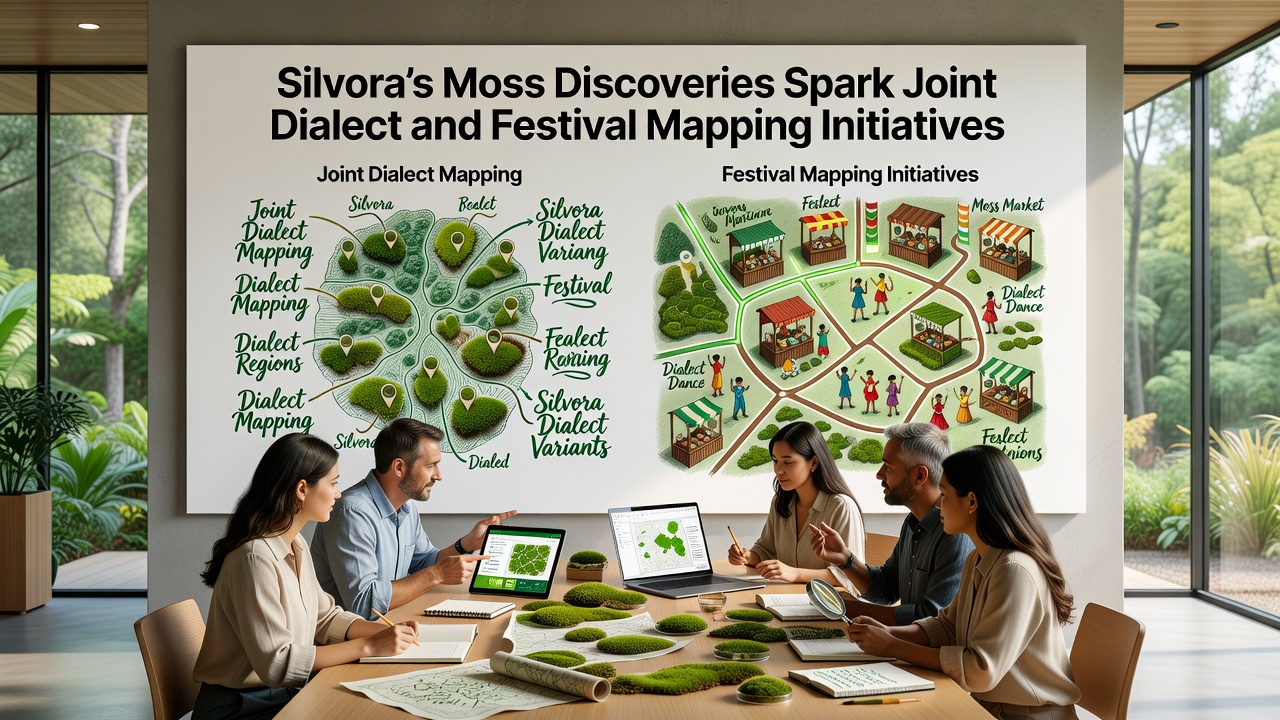
School programs integrated bryophyte sampling with dialect boundary documentation throughout 2025, and students collected specimens while recording spoken narratives from residents in the same locations. This dual approach produced maps that overlay moss growth zones directly onto phonetic isogloss lines, and the resulting visuals helped festival planners identify sites where traditional harvest celebrations might need adjustment because of changing vegetation cover. Evidence from these combined efforts indicates that ecological indicators can serve as proxies for cultural continuity in regions where direct linguistic records remain sparse.
One study released in mid-2025 compared historical festival routes with current moss distribution, and it found that several longstanding event paths now cross areas with higher bryophyte density than recorded two decades earlier. Planners have used these findings to propose route modifications that preserve both ecological integrity and community participation, while archivists have incorporated the same data into digital dialect atlases that update automatically as new field reports arrive.
Joint Initiatives Take Shape in 2026
By October 2026, coordination meetings between dialect archivists and festival committees had produced a shared database that merges moss survey results with oral history timestamps, and this resource now supports predictive modeling for both environmental monitoring and cultural event scheduling. Participants report that the database allows users to query specific locations and retrieve layered information on vegetation, speech patterns, and past festival activities in a single interface.

Additional partnerships have formed with forestry management groups to ensure moss sampling occurs without disrupting understory habitats, and these agreements specify protocols that protect sensitive colonies during data collection. Figures from the ongoing project show that over 180 distinct moss sites have been catalogued so far, each tagged with corresponding dialect recordings and festival notes from the same vicinity.
Broader Applications and Data Integration
Similar methods have drawn attention from heritage organizations outside the immediate region, and researchers have shared protocols through open-access repositories that allow other communities to adapt the framework for their own ecological and linguistic records. According to reports from the European Environment Agency, integrated mapping of this type can improve long-term tracking of habitat changes while preserving intangible cultural elements that depend on those same landscapes.
Festival organizers have begun testing event layouts that incorporate moss preservation zones as designated quiet areas, and early feedback indicates these adjustments maintain visitor numbers while reducing foot traffic on fragile sites. Archivists meanwhile continue to expand audio collections by training local volunteers in standardized recording techniques that align with moss survey grids.
Conclusion
The convergence of moss research with dialect and festival mapping in Silvora has created a model that links environmental monitoring directly to cultural documentation, and ongoing data collection through October 2026 continues to refine the shared tools used by all participating groups. Further expansion of the database is scheduled for the following year, with additional layers planned for soil composition and seasonal event timing.